Understanding and Resolving OBD-II Error Code P0507: Idle RPM Higher Than Expected
Have you ever noticed your engine idle at unusually high RPM and wondered why the Check Engine light came on? If your OBD-II scanner flagged P0507 – Idle Air Control System RPM Higher Than Expected, you'll want to read on. We'll walk you through what this code means, common causes, smart fixes, and introduce CR MAX Idle Control Cleaner—a top-performing cleaning solution that may help restore proper idle.
What Does P0507 Mean?
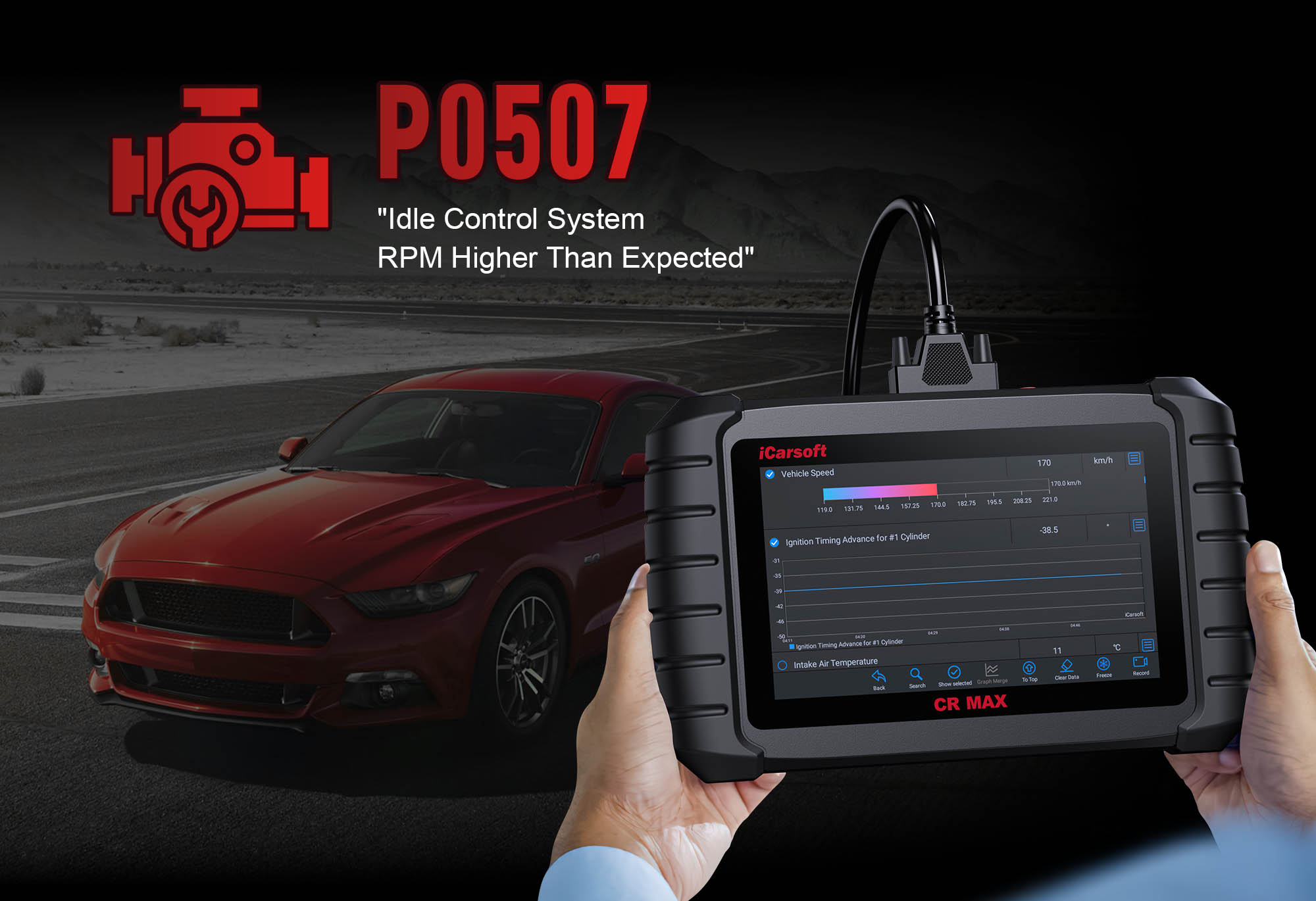
The P0507 trouble code is triggered when your vehicle's Engine Control Module (ECM) detects that the idle RPM is higher than the manufacturer's specified range. This deviation from normal idle isn’t just a minor annoyance—it directly impacts critical vehicle performance metrics:
-
Fuel efficiency: High idle burns extra fuel, lowering MPG by 8–15%.
-
Emissions: Unregulated idle leads to higher hydrocarbon (HC) and carbon monoxide (CO) output, risking emissions test failure.
-
Drivability: Elevated idle can cause rough shifting, "creeping" when stopped, or unstable engine operation.
Idle speed is carefully calibrated by manufacturers (typically 600–900 RPM for most gasoline engines). When the ECM detects idle persistently above this range—even after the engine is fully warmed up—it triggers P0507.
Common Symptoms and Risks
P0507 rarely goes unnoticed, but some symptoms are more subtle than others. Catching these early prevents long-term damage:
Check Engine Light (CEL) Illumination
The most consistent indicator— the light stays on until the root cause is fixed and the code is cleared.
Persistent High Idle
Idle remains above 1,000 RPM even after the engine is fully warmed up (10–15 minutes of driving).
Fluctuating Idle
Engine RPM bounces between 800–1,400 RPM at idle, making the vehicle feel unstable or "surgy."
Reduced Fuel Economy
Extra idle RPM wastes fuel—you’ll notice more frequent trips to the gas station without changes to driving habits.
Long-Term Engine Wear
Unnecessary high idle puts extra stress on bearings, pistons, and valves, shortening engine lifespan.
Common Causes of P0507
P0507 almost always traces back to airflow imbalances—the ECM can’t regulate the air-fuel mixture correctly at idle. Below are the most frequent culprits, ordered by likelihood:
-
Vacuum Leaks (Top Cause): Cracked intake hoses, loose PCV lines, or a leaking intake manifold gasket let unmeasured air into the engine. The ECM over-fuels to compensate, raising idle RPM.
-
Dirty/Clogged Idle Air Control (IAC) Valve: The IAC valve controls airflow when the throttle is closed. Carbon buildup or grime blocks its movement, preventing it from reducing airflow to lower idle.
-
Throttle Body Issues: Carbon deposits on the throttle plate or bore keep the throttle slightly open at idle. Physical damage (e.g., a stuck throttle plate) also causes high idle.
-
EVAP System Malfunctions: A stuck-open EVAP purge valve or cracked canister hose pushes extra fuel vapors into the intake, disrupting the air-fuel mixture.
-
Electrical/PCM Problems: Faulty sensors (e.g., throttle position sensor, mass airflow sensor), frayed wiring, or a failing Powertrain Control Module (PCM) send incorrect data to the ECM.
Step-by-Step Diagnosis & Repair Guide (“how to fix P0507 code quickly”)
Diagnosing P0507 is straightforward with a systematic approach—start with simple checks before moving to complex repairs:
-
Scan for Codes & Clear False Triggers
-
Use an OBD-II scanner (e.g., iCarsoft CR MAX) to read P0507 and related codes (e.g., P0121 for throttle position sensor faults).
-
Clear existing codes and test-drive briefly—if P0507 returns, the issue is active (not a one-time glitch).
-
Inspect for Vacuum Leaks
-
Visually check intake hoses, PCV lines, and the intake manifold gasket for cracks, holes, or loose connections.
-
Test for leaks: Spray soapy water on suspect areas—bubbles indicate a leak. For hard-to-find leaks, use a smoke machine (professional shops often offer this service).
-
Repair: Replace cracked hoses, tighten loose clamps, or seal small leaks with high-temp RTV gasket maker.
-
Clean the IAC Valve & Throttle Body
Carbon buildup is a common fix—use CR MAX Idle Control Cleaner for safe, effective results:
-
Locate the IAC valve (near the throttle body, use your vehicle’s service manual or scanner’s component guide) and throttle body.
-
Disconnect the IAC valve’s electrical connector and remove the valve. For the throttle body, disconnect the air intake tube.
-
Spray CR MAX Idle Control Cleaner on the IAC valve’s pintle (small metal rod) and throttle plate/bore. Wipe away dissolved carbon with a clean cloth—avoid scratching surfaces.
-
Let components dry completely (5–10 minutes) before reinstalling.
Pro Tip: Never use brake cleaner or carburetor cleaner on IAC valves—these harsh chemicals damage plastic and rubber components. CR MAX Idle Control Cleaner is formulated to be safe for EVAP and IAC systems.
-
Test EVAP System Components
-
Inspect the EVAP purge valve (near the intake manifold) for cracks or oil residue. Listen for a clicking sound when the engine starts—no click = faulty valve.
-
Check EVAP hoses and the charcoal canister (under the vehicle) for cracks or disconnections. Replace damaged parts.
-
Check Electrical Connections & Sensors
-
Inspect wiring for the IAC valve, throttle position sensor (TPS), and mass airflow sensor (MAF) for fraying, corrosion, or loose connectors.
-
Use a multimeter to test sensor resistance (refer to manufacturer specs). For example, a TPS should show smooth resistance changes as the throttle opens/closes—erratic readings = faulty sensor.
-
Repair & Verify Fix
-
Replace faulty components (e.g., IAC valve, TPS) with OEM-compatible parts.
-
Clear P0507 with an OBD-II scanner, then take a 20–30 mile test drive (include city and highway driving).
-
Re-scan after driving—no P0507 + stable idle (600–900 RPM) = fix successful.
Why Choose CR MAX Idle Control Cleaner?
When searching for “best cleaning spray for idle air control valve,” CR MAX Idle Control Cleaner stands out as a professional-grade solution tailored to P0507-related issues. Here’s why it’s trusted by DIYers and technicians:
Fast-Acting Formula
Dissolves carbon deposits and grime in minutes—no need for prolonged soaking.
System-Safe Design
Compatible with IAC valves, throttle bodies, and EVAP components—won’t damage plastic, rubber, or sensors.
Professional Endorsement
Frequently recommended by mechanics for P0507 repairs—restores airflow without risking component damage.
Easy to Use
Comes with a precision spray nozzle to target hard-to-reach areas (e.g., IAC valve pintles) without overspray.
CR MAX idle control cleaner isn’t just a temporary fix—it helps prevent future carbon buildup, reducing the chance of P0507 recurring.
When to Seek Professional Help
If P0507 persists after the above steps, the issue may require advanced diagnostics:
-
Internal Engine Problems: Low compression (e.g., worn piston rings) or a stuck valve can cause high idle—requires a compression test.
-
PCM Malfunctions: A failing PCM may need reprogramming or replacement (only done by dealerships or certified shops).
-
Obscure Vacuum Leaks: Leaks in the intake manifold or head gasket require professional smoke testing to locate.
Qualified technicians use tools like the iCarsoft CR MAX to run bi-directional tests (e.g., commanding the IAC valve to open/close) and log live data, pinpointing hard-to-find issues.
Summary Table: P0507 Fix Steps
|
Step
|
Action
|
|
1
|
Scan and note P0507 + related fault codes
|
|
2
|
Inspect vacuum hoses and intake manifold for leaks
|
|
3
|
Clean IAC valve and throttle body (use CR MAX Idle Control Cleaner)
|
|
4
|
Check EVAP purge valve, canister, and hoses for damage
|
|
5
|
Test electrical connections and sensors (TPS, MAF, IAC)
|
|
6
|
Repair/replace faulty parts, reset codes, and test drive
|
Conclusion
Trouble code P0507 doesn’t have to be a frustrating repair—its root cause is almost always a fixable airflow issue: vacuum leaks, carbon buildup, or a faulty valve. By following the step-by-step diagnostic path and using a high-quality product like CR MAX Idle Control Cleaner, you can restore smooth, normal idle RPM without unnecessary parts replacements.
Remember: Simple checks (like inspecting vacuum hoses) often solve P0507. If you’re unsure about any step, consult a professional—but for most DIYers, this guide and the right tools will get your vehicle back to efficient, stable operation in no time.