Fix P0474: Exhaust Pressure Sensor 'A' Circuit Intermittent – Trust iCarsoft CR Eagle
If you’ve ever turned on your vehicle only to be greeted by a glowing check engine light, you know the mix of frustration and anxiety that follows. When a scan reveals the OBD2 code P0474, you’re staring down an issue related to your exhaust pressure sensor circuit—and ignoring it can lead to far more serious (and expensive) problems down the line. From reduced fuel efficiency and lackluster performance to potential damage to your engine or exhaust system, P0474 demands attention. But fear not: with the right knowledge and tools, you can diagnose, fix, and even prevent this code from recurring—all without relying on costly mechanic visits.
What Is OBD2 Code P0474?
OBD2 (On-Board Diagnostics II) codes are standardized error codes used by all modern vehicles (1996 and newer in the U.S., 2001 and newer in the EU) to communicate issues with various systems. P0474 is classified as a “powertrain” code, meaning it relates to components that generate or transmit power—specifically, the exhaust system.
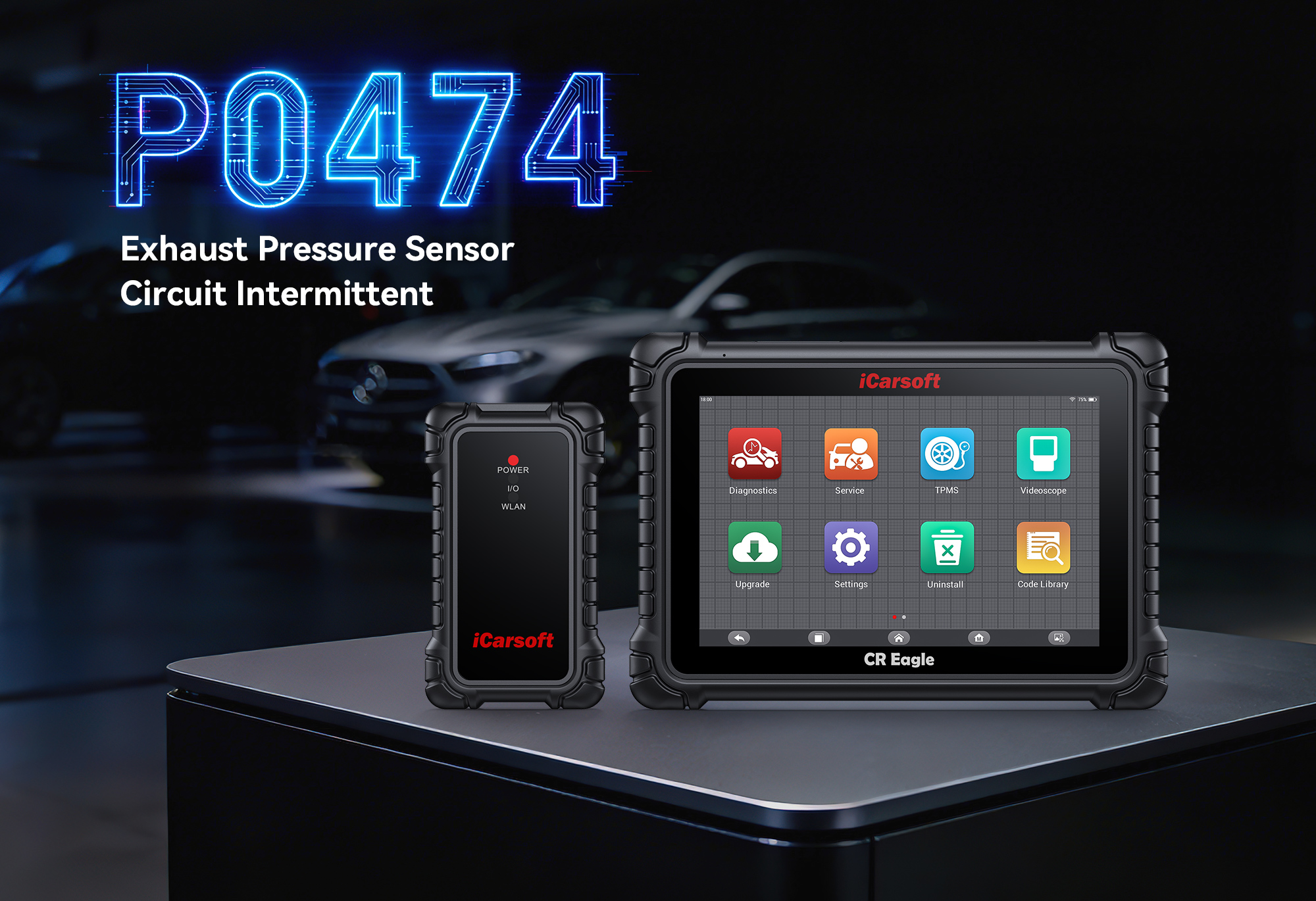
The official definition of P0474 is: “Exhaust Pressure Sensor ‘A’ Circuit Intermittent”. Let’s break this down term by term to eliminate confusion:
-
Exhaust Pressure Sensor (EPS): Also known as the exhaust backpressure sensor, this component monitors the pressure of exhaust gases as they exit the engine. It sends real-time data to your vehicle’s Engine Control Module (ECU), which uses this information to optimize fuel injection, ignition timing, and exhaust gas recirculation (EGR) systems.
-
“A”: Indicates the primary exhaust pressure sensor (some vehicles have secondary sensors, which would trigger codes like P0475 or P0476).
-
Circuit Intermittent: “Circuit” refers to the electrical wiring, connectors, and pathways linking the sensor to the ECU. “Intermittent” means the issue isn’t constant— the sensor or circuit may function normally at times and fail at others, making diagnosis tricky.
In short, P0474 tells you that your vehicle’s ECU is receiving inconsistent or erratic signals from the primary exhaust pressure sensor circuit. This inconsistency prevents the ECU from making accurate adjustments to engine systems, leading to performance and efficiency issues.
Common Symptoms of P0474
While some drivers may not notice immediate issues (especially if the code is intermittent), most will experience one or more of the following symptoms:
-
Illuminated Check Engine Light (MIL): The most obvious sign—solid or flashing (solid is more common for P0474).
-
Reduced Fuel Efficiency: ECU defaults to “safe mode” with suboptimal fuel injection, decreasing miles per gallon (MPG).
-
Lack of Power/Acceleration: ECU limits engine power to protect components, leading to sluggish acceleration or difficulty climbing hills.
-
Rough Idle: Engine shaking or uneven running when at a stop.
-
Increased Emissions: Disrupted EGR valve operation leads to higher pollutant output and potential emissions test failure.
-
Stalling or Hesitation: Severe intermittent circuit issues can cause stalling, especially during acceleration or gear shifts.
What Causes OBD2 Code P0474?
To fix P0474 effectively, identify the root cause first. Below are the most common triggers, ordered by frequency:
Faulty Exhaust Pressure Sensor (EPS)
Wear-and-tear, high temperatures, or debris cause internal electrical degradation, leading to intermittent signal transmission. Signs include inconsistent voltage readings or physical damage (cracks, corrosion).
Damaged or Frayed Wiring
Wiring near engine/exhaust is vulnerable to heat, vibration, sharp components, or rodent damage—frayed/broken wires or short circuits disrupt signal flow.
Loose/Corroded/Contaminated Connectors
Moisture, dirt, or soot infiltrates sensor connectors, causing poor electrical contact and intermittent signal issues (worse in wet/cold weather).
Clogged Exhaust Pressure Tube
Soot/carbon deposits block the small tube sampling exhaust pressure, leading to intermittent readings as blockages shift or clear temporarily.
Malfunctioning Engine Control Module (ECU)
Rare cause—software glitches, internal damage, or outdated firmware prevent the ECU from processing sensor signals correctly.
Exhaust Leaks
Leaks near the sensor cause inaccurate pressure readings (sensor detects ambient air instead of exhaust gas pressure).
Why the iCarsoft CR Eagle Is the Best Tool for Diagnosing P0474
Diagnosing intermittent codes like P0474 requires precision and advanced features—something basic scanners lack. The iCarsoft CR Eagle is designed for DIYers and professionals alike, with these key advantages:
Instant, Detailed Code Reading
Displays P0474 with detailed descriptions + related codes (P0470-P0473, P0475) to eliminate diagnostic guesswork.
Live Data Monitoring
Track real-time EPS voltage (0.5–4.5V typical range), exhaust gas temperature, and ECU signals to catch intermittent glitches.
Bi-Directional Control (Active Testing)
Activate the EPS remotely to verify responsiveness—rule out wiring/ECU issues without disassembly.
Freeze Frame Data
Captures vehicle conditions (speed, RPM, temp) when P0474 was triggered to recreate the issue and pinpoint root causes.
Multi-System & Multi-Brand Compatibility
Covers engine/ABS/airbag/transmission systems + 100+ vehicle brands (Ford, Toyota, BMW, Mercedes-Benz, etc.).
Safe Code Clearing & ECU Reset
Clears P0474 and re-calibrates the ECU post-repair to prevent false codes and ensure optimal performance.
Lifetime Free Wi-Fi Updates
Access latest DTC definitions and vehicle compatibility—no recurring fees or new scanner purchases.
User-Friendly Design
5-inch color touchscreen with intuitive menus and step-by-step prompts—no technical expertise required.
Step-by-Step Guide to Diagnosing and Fixing P0474 with the iCarsoft CR Eagle
Step 1: Connect the CR Eagle to Your Vehicle
Plug the CR Eagle’s OBDII connector into the port (under driver’s dashboard), turn on ignition (ACC/ON mode), and power on the tool—it auto-connects to the ECU.
Step 2: Read DTCs and Freeze Frame Data
Select “Diagnostics” > “Engine” > “Read DTCs” to retrieve P0474 + related codes. View “Freeze Frame” to see conditions when the code triggered (speed, RPM, temp).
Step 3: Clear the Code and Test-Drive
Select “Clear DTCs” to erase P0474, then test-drive (focus on trigger conditions: highway driving, hill climbs). Re-scan—if P0474 returns, proceed to diagnosis.
Step 4: Monitor Live Data
Select “Live Data” > “Engine” > “Exhaust Pressure Sensor” to monitor voltage. Look for stable 0.5–4.5V (varies by vehicle) that changes with engine load. Erratic readings indicate a problem.
Step 5: Perform a Bi-Directional Test
Select “Bi-Directional Control” > “Exhaust Pressure Sensor Test” to activate the sensor. A non-responsive sensor is faulty; normal response points to wiring/connector/tube issues.
Step 6: Inspect Wiring, Connectors, and Pressure Tube
Check EPS wiring for fraying/damage, clean corroded connectors with contact cleaner, and clear soot from the pressure tube (use compressed air/small brush).
Step 7: Replace the Exhaust Pressure Sensor (if needed)
Swap faulty sensors with OEM/high-quality aftermarket parts (follow vehicle repair manual for removal/install steps).
Step 8: Clear Codes and Verify the Fix
Clear DTCs post-repair, take a 20–30 minute test-drive, and re-scan. If no codes appear, the fix is successful!
FAQs: Your P0474 Questions Answered
Can I drive my vehicle with code P0474?
Short trips (e.g., to the auto parts store) may be safe, but prolonged driving is not recommended. P0474 can lead to reduced fuel efficiency, power loss, and potential engine or exhaust damage over time. If the check engine light is flashing, stop driving immediately—this indicates a severe issue that could cause catastrophic damage.
How much does it cost to fix P0474?
Costs vary depending on the root cause:
-
Exhaust pressure sensor: $50–$200 (part only; labor adds $80–$150).
-
Wiring/connector repairs: $50–$150 (labor-only).
-
Clogged pressure tube: $30–$100 (cleaning/replacement).
-
ECU repair/reprogramming: $200–$500 (rare).
Using the CR Eagle saves $80–$150 in diagnostic fees and avoids unnecessary part replacements.
Do I need mechanical experience to use the CR Eagle for P0474?
No! The CR Eagle is designed for DIYers with little to no mechanical experience. Its intuitive touchscreen, step-by-step prompts, and detailed code descriptions guide you through the process. You don’t need to know how to disassemble complex components—just basic hand tools for inspecting wiring or replacing the sensor.
Will the CR Eagle work with my specific vehicle?
The iCarsoft CR Eagle supports over 100 vehicle brands and is compatible with OBDII/EOBD/CAN/CAN-FD protocols. This includes all 1996+ U.S. vehicles, 2001+ EU vehicles, and most Asian imports. For model-specific compatibility, check the official iCarsoft CR Eagle product page or contact customer support.
Can the CR Eagle diagnose other exhaust-related codes?
Absolutely! The CR Eagle covers all exhaust system-related DTCs, including P0470 (Circuit Malfunction), P0471 (Range/Performance), P0472 (Low Input), P0473 (High Input), and P0475 (Sensor B Circuit Intermittent). It also monitors EGR valve performance, exhaust gas temperature, and turbocharger pressure (on turbocharged vehicles).
How often should I update the CR Eagle’s software?
iCarsoft recommends updating every 3–6 months to ensure compatibility with new vehicle models and DTC definitions. Updates are free and easy—connect to Wi-Fi, select “Update” from the menu, and follow prompts (no computer/technical skills needed).
What if P0474 reappears after I fix it?
If P0474 returns, you may have missed the root cause (faulty replacement sensor, unrepaired wiring, re-clogged tube, or undetected exhaust leak). Use the CR Eagle’s live data and bi-directional testing to re-diagnose—focus on uninspected areas.
Is the iCarsoft CR Eagle worth the investment?
Absolutely. For DIYers, it pays for itself after 1–2 uses (saving on diagnostic fees/unnecessary parts). For professionals, it’s a time-saving tool that improves accuracy. With lifetime free updates and multi-system coverage, it’s a long-term investment in your vehicle’s health.
Preventing P0474: Maintenance Tips
After fixing P0474, follow these tips to prevent recurrence:
-
Inspect wiring/connectors every 6 months: Check for damage, especially if driving in harsh conditions (extreme heat/cold, off-road).
-
Change engine oil on time: Clean oil reduces soot buildup that clogs pressure tubes and damages sensors.
-
Use high-quality fuel: Poor fuel increases emissions/soot, harming the EPS and exhaust system.
-
Repair exhaust leaks promptly: Even small leaks disrupt pressure readings—fix loud exhaust noise or performance drops immediately.
-
Scan for codes every 3–6 months: Use the CR Eagle to catch intermittent issues before they trigger full codes.
Final Thoughts: Take Control of P0474 with the CR Eagle
OBD2 code P0474 may seem intimidating at first, but with the right knowledge and tools, it’s a problem you can solve on your own. The key is to diagnose the root cause (not just clear the code) and use a reliable diagnostic tool like the iCarsoft CR Eagle to guide you through the process.
Whether you’re a DIY enthusiast looking to save money on repairs or a professional mechanic seeking a time-saving tool, the iCarsoft CR Eagle delivers. Its combination of detailed code reading, live data monitoring, bi-directional control, and user-friendly design makes it the ultimate solution for P0474 and hundreds of other vehicle issues. Invest in the CR Eagle today to diagnose and fix issues quickly, keep your vehicle running smoothly, and avoid costly mechanic visits.